
August 20, 2026 | 02:24 pm
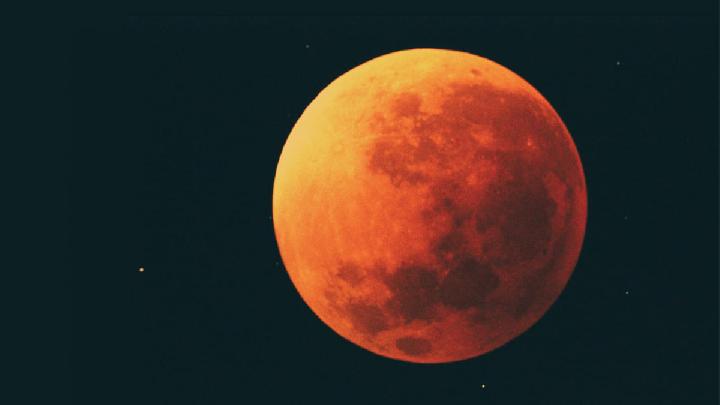
TEMPO.CO, Jakarta - After millions across Europe and North America turned their heads upward to see the solar eclipse (safely behind eclipse glasses), it will be the Moon's turn to steal attention with the lunar eclipse.
Exactly a week from now, on August 27-28, a partial lunar eclipse will take place during the full moon, widely known as the 'Sturgeon Moon,' referring to the historically abundant sturgeon fish during this time.
Here's everything to know about the next celestial spectacle, citing various sources:
Which part of the world will see the lunar eclipse?
The lunar eclipse is visible to nearly everyone living in North America and South America, as well as part of Europe, Western Asia, and Africa, according to NASA.
But not everyone is able to see it to the same degree, as the full eclipse will only be visible to the US East Coast and Midwest, and the entirety of South America, according to USA Today.
What happens during a lunar eclipse?
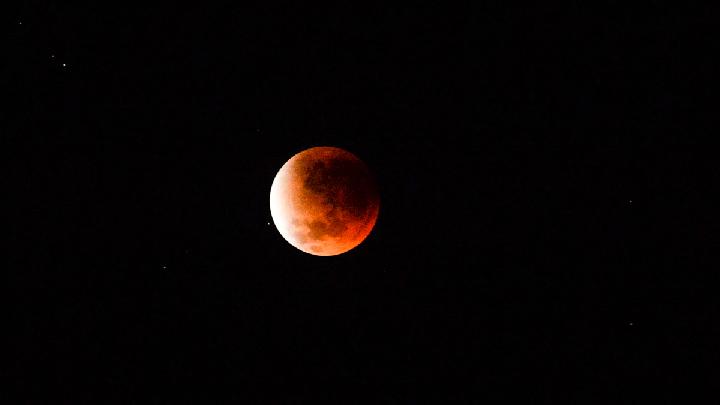
Lunar eclipses happen during a full moon, when Earth moves between the Moon and the Sun, casting a coppery shadow onto the moon. This is because the Moon does not produce its own light and instead reflects the sunlight that's passing through the Earth's atmosphere. This is also why lunar eclipses are sometimes referred to as 'Blood Moon.'
A total lunar eclipse happens when the Sun, the Moon, and Earth lie in a straight line, meaning the Moon is passing through the darkest part of the Earth's shadow (umbra). This, however, does not always happen.
The upcoming eclipse, for example, will be a partial lunar eclipse. Meaning, only a section of the Moon passes through the umbra, as other parts of it pass through the Earth's penumbra, or the outer region of the Earth's shadow. This happens because the three celestian bodies are not in perfect alignment.
While it won't be a total lunar eclipse, it's close enough. BBC Sky at Night Magazine reported that about 96 percent of the Moon's surface will disappear behind the Earth's shadow.
What time will the lunar eclipse happen?
From start to finish, August's lunar eclipse will last about 399 minutes, according to EarthSky. The 'penumbral phase,' where the Moon starts to edge into the Earth's outer shadow, will happen over an hour at the start, before the Moon makes its journey across the umbra.
According to USA Today, across North America, the eclipse will reach its maximum 'greatest eclipse' on Friday, 12:12 a.m. ET, with the eclipse beginning in earnest around 09:34 p.m. ET.
In the UK and Ireland, meanwhile, the lunar eclipse will be visible in the early hours of August 28, with around 93 percent of the Moon in the Earth's umbra. BBC Sky at Night pointed out that the maximum eclipse will occur at 05:13 a.m. BST in the UK, when the Moon is "low in the west-southwestern sky" under the "brightening dawn twilight" sky.
How to see the lunar eclipse safely
Unlike solar eclipses, you don't need special equipment to see lunar eclipses. It is 100 percent safe to watch with the naked eye. Despite this, a pair of binoculars or a small telescope will help enhance your view.
It is also advisable to check the weather and cloud cover where you are to ensure optimal viewing conditions. US Today also directs you to find the darkest possible location away from light pollution. Give your eyes some time to adjust to the darkness, and avoid looking at bright lights such as lamps and phones.
When is the next lunar eclipse?
A lunar eclipse happens between two and five times a year, according to Royal Museums Greenwich, with a total lunar eclipse occurring at least two every three years.
It doesn't happen every month despite the full moon because the Moon’s orbit is inclined by 5 degrees relative to the Earth’s orbit, meaning it will travel up and down in its orbit as it travels around the Earth. In other words, it won't always align with the Sun and Earth.
With that being said, the next visible lunar eclipse will occur in February 20-22, 2027. While it will be a penumbral eclipse, NASA said it will be visible in the Americas, Europe, Africa, Asia, Australia, and Antarctica.
Read: August 'Almost Blood Moon': When and Where to See It in the US
Click here to get the latest news updates from Tempo on Google News
August 'Almost Blood Moon': When and Where to See It in the US
20 hari lalu

An "almost blood moon" will light up US skies in late August 2026 as a deep partial lunar eclipse coincides with the full moon.
Look Up! Blue Moon to Illuminate This Week's Sky Across U.S.
25 Mei 2026

Stargazers are in for a treat as the month is ending with a second full moon appearing as both a blue moon and a micromoon.
Total Lunar Eclipse Singapore Tonight: Venus-Saturn Conjunction to Follow
3 Maret 2026
Tonight's total lunar eclipse over Singapore will paint the sky deep crimson, enhanced by the Venus-Saturn conjunction.
Early Phase of Total Lunar Eclipse Visible in West Java
3 Maret 2026
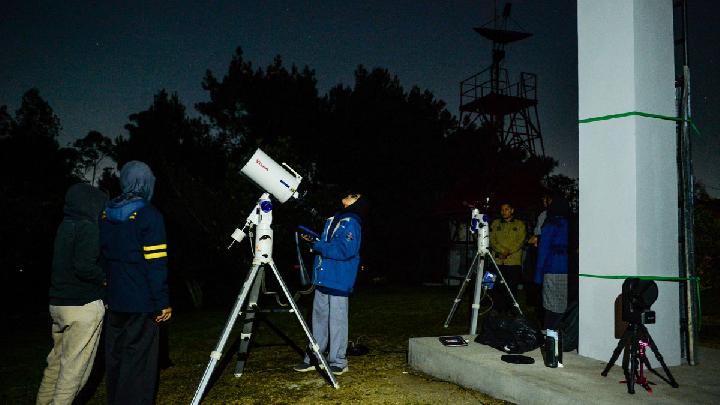
Not all phases of the total lunar eclipse on March 3, 2026, will be observable in Indonesia.
9 Exciting Night Sky Events in March 2026
2 Maret 2026
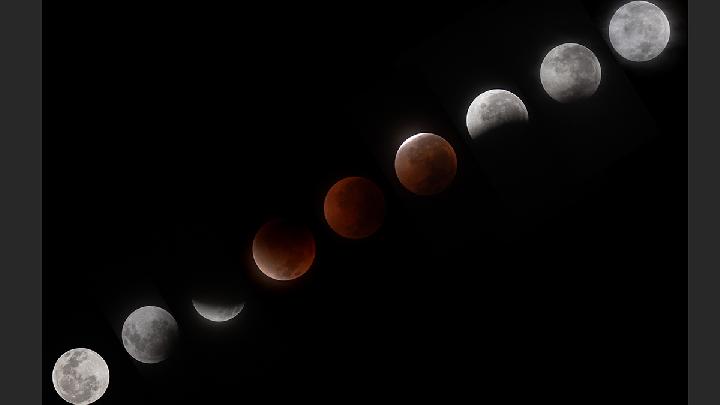
Stargazers are treated all month, with the wonderful cosmic sights of must-see night sky events in March 2026. Find the details of each event here.
Indonesia's Bosscha to Observe and Live Stream Total Lunar Eclipse
2 Maret 2026
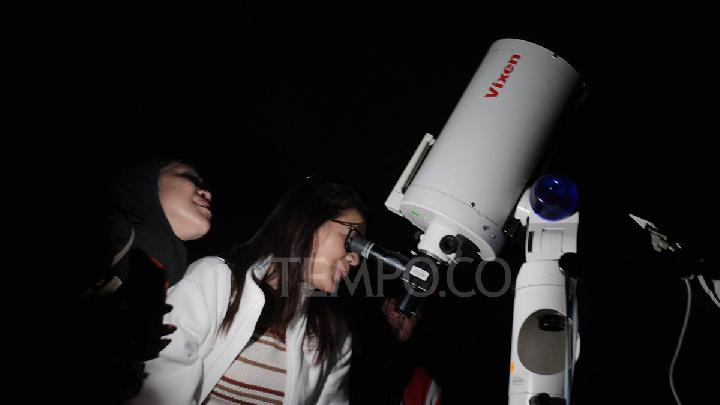
The Bosscha Observatory is preparing to observe a total lunar eclipse on Tuesday, March 3, 2026, from Lembang, West Bandung, Indonesia.
Total Lunar Eclipse in March: Science Centre Singapore Hosts Free Viewing
12 Februari 2026
On March 3, a rare total lunar eclipse will unfold over Singapore's skies, and Science Centre Singapore will host a free viewing session.
Four Eclipses to Occur in 2026, Only One Seen from Indonesia
7 Januari 2026

The first eclipse will be a solar eclipse on February 17th, coinciding with the celebration of Chinese New Year.
List of 2026 Lunar Events: 13 Full Moons, Supermoons, and Eclipses
2 Januari 2026
The 2026 night sky will be graced by 13 full moons, featuring 3 supermoons, a rare Blue Moon, and two lunar eclipses, one of which will be Blood Moon.
These Are Bosscha Observatory's Total Lunar Eclipse Reports in Indonesia
8 September 2025
Observatorium Bosscha operates a network of 22 observation points, ensuring clear observations of the lunar eclipse even in cloudy conditions.