TEMPO.CO, Jakarta - It's not the first time the Swiss resort of Bürgenstock is playing host to history-makers. Over the decades this mountain hideaway has welcomed rockstars, world leaders, and even been the site of past peace deal signings.
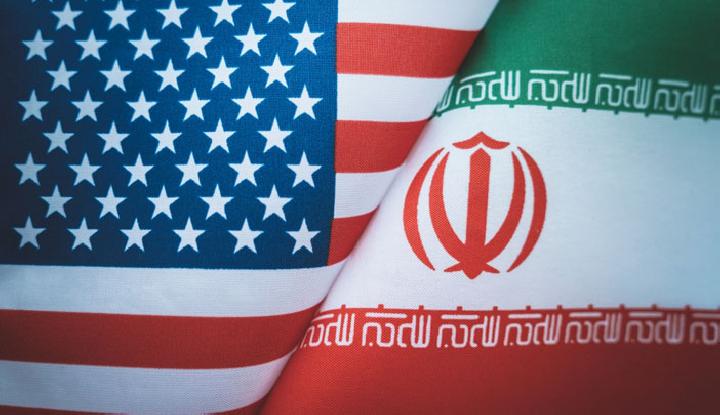
Delegations from the US and Iran are due to meet there on Friday, capping off a rollercoaster week of diplomacy that began with a social media post Sunday evening from US President Donald Trump telling the "ships of the world" to "start your engines."
Despite Trump's announcement that the US and Iran had reached a "peace agreement," no details were released. Iranian regime-aligned media began leaking elements of a memorandum of understanding (MoU), and news emerged that both sides had electronically signed a preliminary agreement. Trump said the "official" signing would take place on Friday in Switzerland.
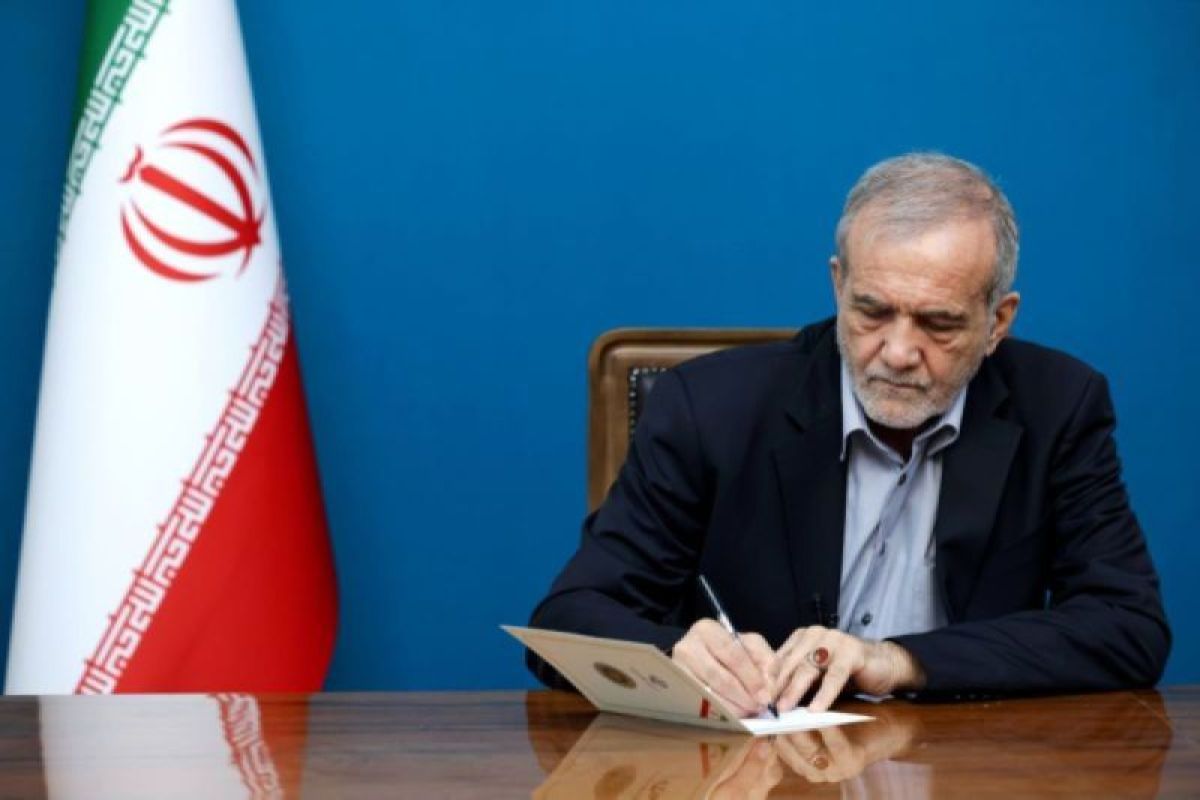
As the week went on, US officials fended off questions about the tentative deal, while Trump traveled to France for the G7 leaders' summit. With pressure building, Trump signed the official text himself, earlier than expected, over a lavish dinner hosted by French President Emmanuel Macron in Versailles on Wednesday. Iranian President Masoud Pezeshkian signed in Tehran.
The MoU kicks off 60 days of negotiations, with the future of Iran's nuclear program in focus. On Thursday, the Swiss government said "initial negotiations" with the US and Iran, along with mediators Pakistan and Qatar, are still planned to go ahead.
The thaw comes after months of missile and drone fire across the Middle East, which followed the US and Israel's attack on Iran in February. Thousands, mostly Iranian, have been killed in the conflict, as well as 13 US servicemembers. Iran's closure of the Strait of Hormuz and attacks on Gulf fossil fuel infrastructure have upended the global economy.
But this is only the beginning of the story — and the question looming over the Swiss mountain talks is exactly what kind of history will be made.
Trump: 'They don't want to get bombed'
We sat Trump's G7 press conference on Wednesday, as he espoused the benefits of his new framework agreement with Iran.
In what seemed like an hour-long greatest-hits montage of controversial lines from the last few days, Trump praised Tehran's new leadership, claimed he had achieved regime change and prevented a "nuclear holocaust," and reiterated threats to "bomb the hell" out of Iran if they don't reach a broader deal.
When asked what made him so sure that Iran won't impose tolls in the Strait of Hormuz, as outlined in the framework text, he replied "Common sense. They don't want to get bombed."
'A sigh of relief'
G7 leaders gave Trump a strong show of support on Wednesday. French President Macron was resolute in his assessment that the agreement was a "wise" move, and offered to deploy a Franco-British mission to the Strait to assist implementation — something Trump quickly shrugged off.
Rowena Binti Abdul Razak, a London-based lecturer at the School of Oriental and African Studies, agrees that the announcement is a "good step."
"It is the start of what we hope to be a longer peace agreement between the US and Iran. It will definitely calm a lot of tensions that have been growing in the region and beyond the region," she told DW.
"The energy crisis not only affects governments. It affects ordinary people. So, I think everyone's going to be, at least for now, breathing a sigh of relief."
But Macron carefully chose some other words that hinted at his anxiety about the agreement's long-term prospects. "Does it solve everything? No. Are there risks? Yes," he told reporters.
Memorandum misgivings
Few are claiming that the agreement will solve everything.
The nuances of treaty versus memorandum, statement versus non-paper, conclusions versus communique — these debates are usually reserved for diplomats themselves and the political nerds like me who follow their work.
But here's the crux of the matter: There is no deal yet. There's an interim agreement to end fighting and reopen the Strait of Hormuz, which are problems caused by the war itself, rather than the pre-conflict status quo.
"The US administration could have gotten a much better deal than this, but at the same time, there was a desire to open up the Strait of Hormuz," Miad Maleki, a senior fellow with the Iran program at the Foundation for the Defense of Democracies in Washington, told DW.
Maleki added that looming midterm elections meant US officials were dealing with a ticking "political clock."
Trump says Iran deal 'builds a wall'
Trump has claimed the core of his deal is that Iran will never have a nuclear weapon. That's a promise Iran has made several times before, notably in the last Iran nuclear deal — known as the Joint Comprehensive Plan of Action (JCPOA) —negotiated under the administration of President Barack Obama and mediated by the European Union.
Trump was fiercely critical of that agreement and pulled out in 2018.
"The Obama deal was a road to a nuclear weapon. And, let's call it the Trump deal, is a wall for a nuclear weapon. Nobody's going to get through it. We built a wall," he said on Wednesday.
But whether he can achieve substantively more than the sanctions-relief-in-exchange-for-nuclear-curbs model in Obama's JCPOA is far from certain.
Trump himself warned back in 2020 that Iran had "never won a war but never lost a negotiation."
"What Iran says it will and will not do is irrelevant. What's important is the level of verification they accept," Alan Eyre, a fellow at the Middle East Institute and former US negotiator for the JCPOA, told DW.
"I'll be able to compare a Trump nuclear deal with the JCPOA if and when President Trump and his colleagues can negotiate one," he added.
The vice president of Germany's parliament, the Bundestag, German-Iranian politician Omid Nouripour, told DW that the agreement that is on the table "is an admission of failure by the American side."
"To simply leave the conflict now leaves the people in Iran and across the entire region behind with a strengthened regime," he said.
If the US "now believes that it can simply agree a deal with Iran because they have promised not to build the atomic bomb, then it fails to recognize that they've [the Iranian regime] often made that promise but have repeatedly undermined every agreement," he added.
An uphill road ahead
Those negotiators are now expected to begin hashing out those details in the storied Swiss mountain resort overlooking Lake Lucerne from Friday. And the delegations descending on Switzerland seem keen to keep prying eyes away.
It's worth noting that the war in Ukraine is still being waged, two years after the Swiss conference. And a Sudan peace deal signed at the same resort in the 2000s now seems like a bitter slice of history, given the civil war engulfing the country over the last few years. Forging sustainable peace is no easy feat.
The 60 days foreseen for initial US-Iran talks are clearly a moving target — and the Middle East may remain in "interim deal" mode for some time.
DW's Brent Goff and Alex Forrest Whiting contributed to reporting.
Read: Trump Claims Iran Deal Spared Country From Years of Bombing
Click here to get the latest news updates from Tempo on Google News