TEMPO.CO, Jakarta - The threat of megathrust earthquakes in southern Java should not be seen as a source of terror. For disaster experts, the priority is to ensure that the public understands the risks and is adequately prepared when a disaster strikes.
Gayatri Indah Marliyani, a seismic expert from Gadjah Mada University’s (UGM) Geological Engineering Department, stated that a megathrust is not a purely hypothetical threat. In the last 32 years, this phenomenon has occurred twice in Java, triggering destructive tsunamis on both occasions.
"Megathrust has occurred twice in the last 32 years, in 1994 in southern Banyuwangi and in 2006 in Pangandaran. Both events were accompanied by destructive tsunamis," explained Gayatri during the seminar "20 Years of Yogyakarta Earthquake 2006 and Anticipation of Java Megathrust Earthquakes" at the UGM Central Building on Saturday, May 31, 2026.
According to Gayatri, an understanding of active faults and the megathrust zone in southern Java is the foundation for disaster mitigation. She reminded the public that science has not yet been able to accurately predict when an earthquake will strike.
Focus on Mitigation, Not Speculation
Therefore, she said, it is better for the public not to be trapped in speculating about the timing of the earthquake. What is more urgent is to reduce risks through earthquake-resistant housing construction, providing clear evacuation routes, and increasing disaster literacy.
"Rather than focusing on speculating when the earthquake will occur, the primary concern is how to mitigate the risk of the disaster," she added.
Gayatri also noted the fading collective memory of the population regarding major disasters, especially among the younger generation, who did not directly experience the 2006 Yogyakarta earthquake. This condition is considered to reduce awareness of existing geological threats to this day.
Data as a Reference for Preparedness
Dwikorita Karnawati, the head of the Meteorology, Climatology, and Geophysics Agency (BMKG) during the 2017–2025 period, stated that information about the potential of Java's megathrust is not intended to cause panic, but serves as a basis for developing measured mitigation scenarios.
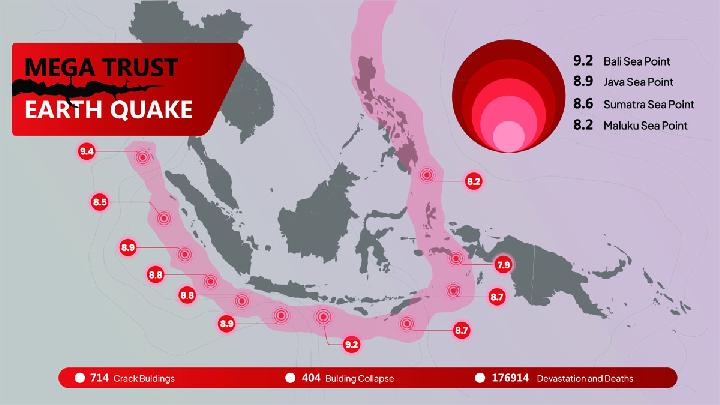
Dwikorita explained that several areas, such as the Sunda Strait, southern Java, and Mentawai, are considered seismic gap zones, which means areas that have not experienced major earthquakes for a long time and are thus suspected to have accumulated tectonic energy for more than two centuries.
"This scientific data is absolutely necessary as a reference for emergency structural preparedness," said Dwikorita.
She reminded the public to approach earthquake threat information calmly and rationally. According to her, education about mitigation, evacuation drills, and the ability to discern accurate information are key to tackling disaster threats.
Dwikorita acknowledged that to date, there is no technology capable of accurately predicting earthquakes. However, various research efforts are still being carried out to develop disaster scenarios as a basis for drawing up mitigation steps.
"Without scenarios, we have no basis for mitigation. Therefore, research is still needed so that we can prepare for the worst-case scenarios," she explained.
Government and Academic Collaboration
Head of the Regional Disaster Management Agency (BPBD) Bantul, Mujahid Amrudin, stated that the government has been developing various mitigation strategies, from establishing UNESCO-standard Tsunami Ready Communities and providing evacuation points to installing early warning systems and family-level disaster education.
"These efforts will continue to be improved through collaboration with the academic community, so that the risk of casualties and losses due to disasters can be minimized as much as possible," he said.
Read: BMKG Records 136 Earthquakes in West Java Throughout May
Click here to get the latest news updates from Tempo on Google News
Indonesia Faces Megathrust Threat as 200-Year Cycle Nears End
26 hari lalu

An analysis of the potential locations in Indonesia for the impending megathrust earthquakes and the urgency of disaster mitigation measures.
Fact Check: BMKG Never Announced a 2026 Megathrust Earthquake Across Indonesia
28 Februari 2026
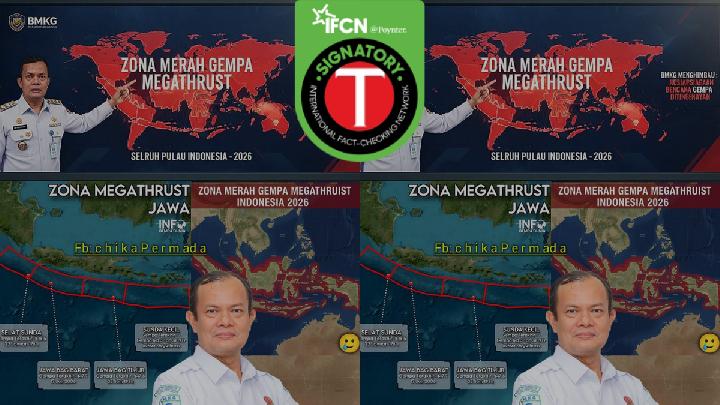
Tempo Fact Check Team found that the BMKG never issued a warning of a major earthquake in Indonesia in 2026.
M6.2 Megathrust Earthquake in East Java, BMKG Reports No Tsunami Threat
6 Februari 2026

The earthquake that occurred is a type of shallow earthquake due to subduction plate activity.
Another Earthquake Hits Aceh Amid Disaster Relief, BMKG: M5.2 at Megathrust Zone
9 Desember 2025

According to BMKG data, the latest earthquake is the fourth felt in Simeulue amidst the ongoing floods and landslides.
M5.0 Earthquake Shakes North Sumatra Amid Ongoing Disaster Relief
2 Desember 2025
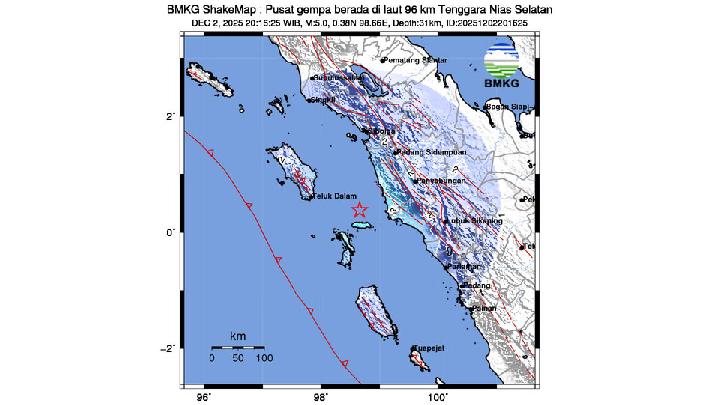
This earthquake occurred amid an ongoing emergency response to devastating floods and landslides in Sumatra and Aceh provinces.
Indonesia's Highest Megathrust Risk: Mentawai and Sunda Straits
29 September 2025
Experts issued a reminder about the extremely high potential for Megathrust earthquakes in the Mentawai Siberut and Sunda Strait zones.
BMKG: Strong M4.9 Earthquake Hits Bengkulu, Indonesia
15 September 2025
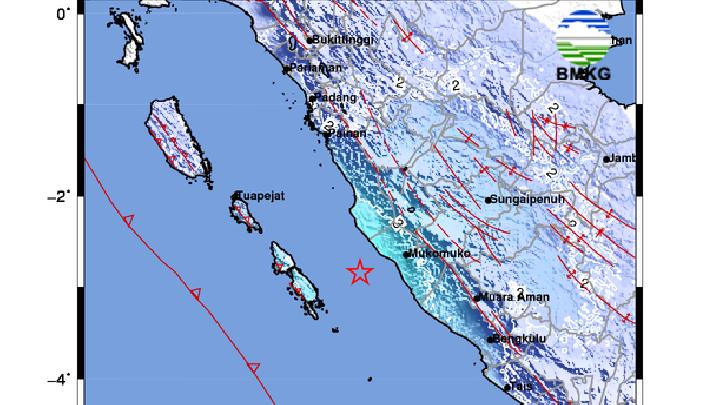
An earthquake struck Mukomuko, Bengkulu, Indonesia, on Sunday night, September 14th, 2025, says Meteorology, Climatology, & Geophysics Agency (BMKG).
Why the BMKG is Concerned About Megathrust Earthquake Threat in Indonesia
15 September 2025
BMKG has stated that Indonesia still faces a threat of a major earthquake in the megathrust zone at several points in the region.
Another M6.8 Earthquake Strikes Russia's Kamchatka, BMKG Reports
3 Agustus 2025
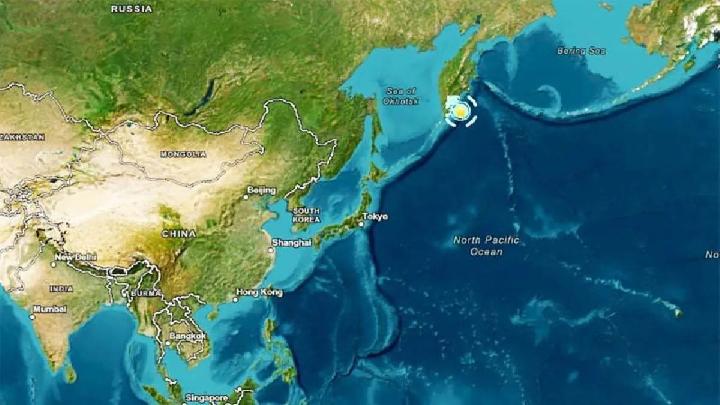
A magnitude 6.8 earthquake struck the eastern coast of Kamchatka, Russia, on Sunday, August 3, 2025, following the main 8.7 magnitude earthquake last Wednesday.
Megathrust Earthquake Jolts Nicobar Islands, Felt in Banda Aceh: BMKG Reports
29 Juli 2025

BMKG data stated that the earthquake had a magnitude of 6.3, while USGS recorded it as M6.5.