
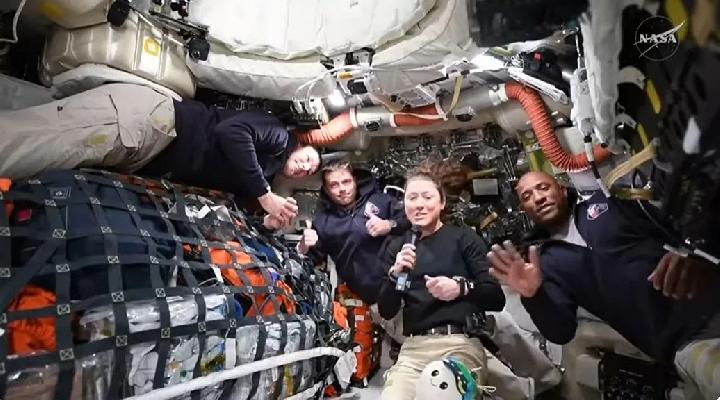
TEMPO.CO, Jakarta - The United States' National Aeronautics and Space Administration (NASA) has approved the iPhone 17 Pro Max for the crew of the Artemis II mission, equipping each astronaut with a device to document their historic journey to the moon.
NASA Administrator Jared Isaacman previously stated that the crew may bring the "latest smartphones" on the mission. A report by The New York Times revealed the lengthy approval process behind this decision.
Currently, four iPhone 17 Pro Max units are orbiting the moon at speeds of approximately 25,000 miles per hour. While this is not the first instance of an iPhone entering space, it marks the first time each crew member has been entrusted with a personal device for capturing photos and videos.
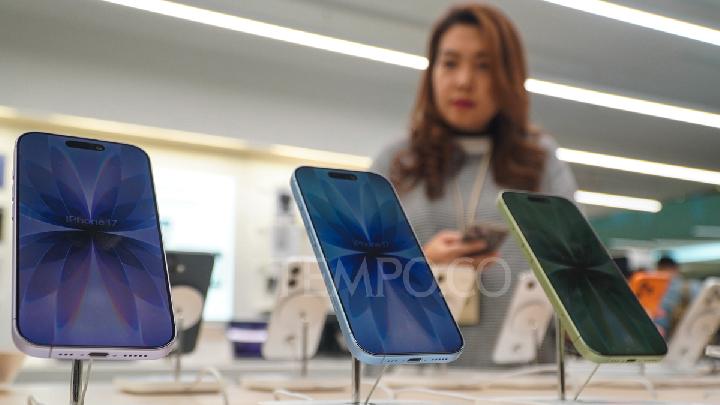 The iPhone 17 Series at the iBoxStore in Kota Kasablanka, Jakarta, October 17, 2025. Tempo/Martin Yogi Pardamean
Apple stated that it played no role in NASA’s internal approval process. However, the tech giant noted that this mission represents the first time an iPhone has fully met the rigorous qualifications for long-term use in orbit and beyond.
Nevertheless, the devices operate under strict limitations. NASA has ensured the iPhones are used exclusively for visual documentation; according to a report by 9to5Mac on April 4, 2026, the handsets "can’t connect to the internet or use Bluetooth."
The certification process for such consumer hardware is complex. Tobias Niederwieser, a researcher at BioServe Space Technologies, outlined the four stages a device must survive before being declared flight-ready.
"The first introduces the piece of hardware to a safety panel. The second identifies the potential hazards of the hardware, which range from moving parts to materials like glass that could shatter. The third lays out a plan for addressing such hazards. The fourth proves that the plan works," he explained.
During this evaluation, NASA assessed various potential risks, including the possibility of the screen shattering due to rapid shifts in atmospheric pressure. The iPhone 17 Pro Max features Ceramic Shield 2 on the front and Ceramic Shield on the rear, materials Apple claims are more durable than standard smartphone glass.
Furthermore, the realities of microgravity remained a primary concern. Inside a confined vessel like the Orion capsule, the device behaves differently than on Earth. NASA even considered using Velcro to secure the phones inside the cabin, though at least one device was safely tucked into a flight suit pocket during the launch phase.
Read: Artemis II Breaks Record for Farthest Human Spaceflight
Click here to get the latest news updates from Tempo on Google News
Artemis II Breaks Record for Farthest Human Spaceflight
9 jam lalu
The astronauts on the Artemis II mission made history on Monday, reaching the farthest distance in space of any human.
Artemis II: Orion Crew Set to Break Deep Space Record
23 jam lalu
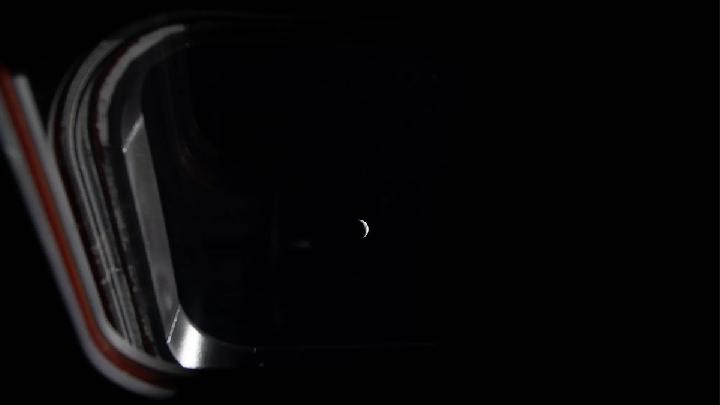
NASA's Artemis II mission is set to break the record for the farthest human travel from Earth during its historic lunar flyby on April 6-7, 2026.
Artemis II Passes Halfway Point to Moon, Sends Earth Photos
2 hari lalu
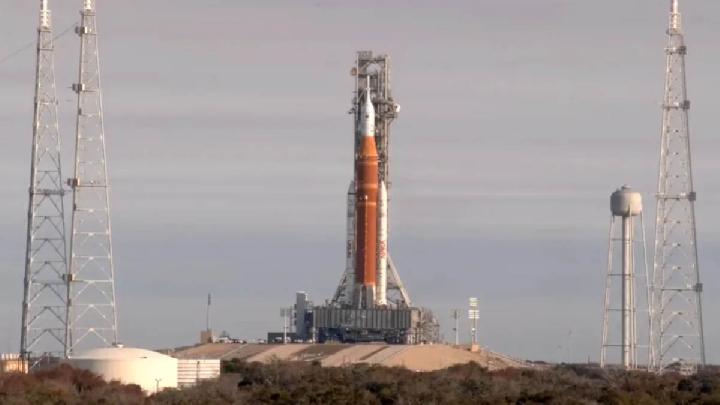
Artemis II is now closer to the Moon than the Earth. The astronauts on board have sent back eye-catching photos of our planet.
Artemis II Astronauts Leave Orbit, Rocket Towards Moon
4 hari lalu
Artemis II astronauts have officially begun their journey to the moon after conducting a successful thruster firing.
NASA Launches Artemis II Mission; Four Astronauts Orbit in "Great Spirits"
5 hari lalu
NASA officially launched the Artemis II mission on April 1, sending a historic four-person crew to orbit the Moon for the first time in over 50 years.












































:strip_icc():format(jpeg):watermark(kly-media-production/assets/images/watermarks/bola/watermark-color-landscape-new.png,1125,20,0)/kly-media-production/medias/5495647/original/074499000_1770385031-barba.jpeg)