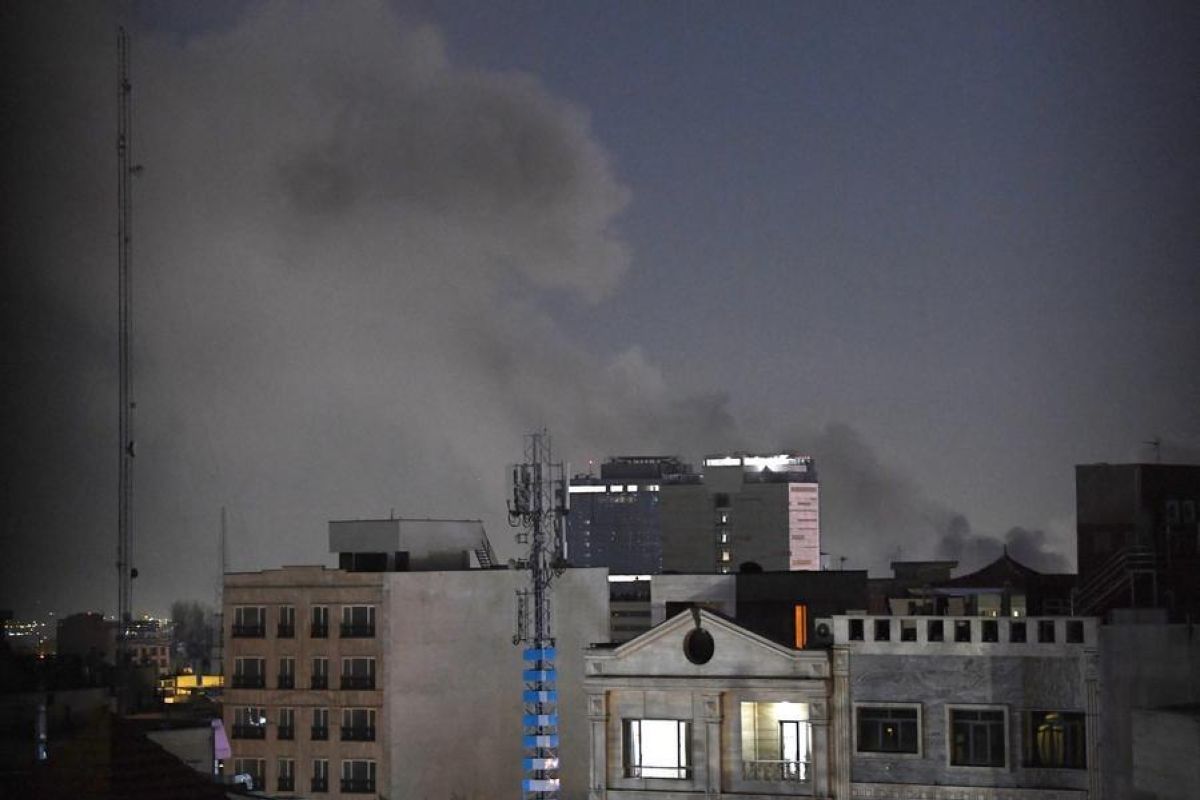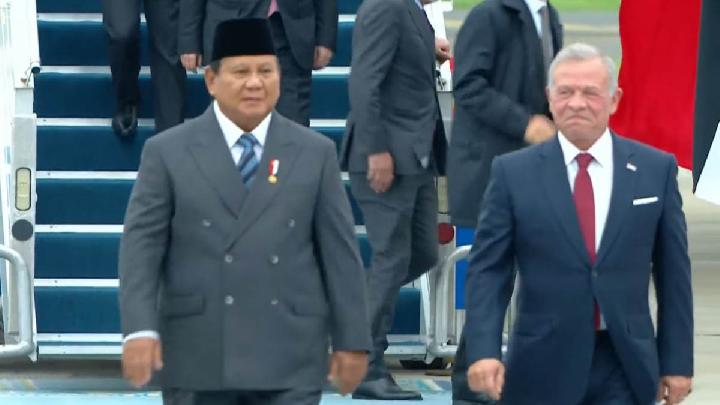
TEMPO.CO, Jakarta - The White House refuted the now-deleted post by the U.S. Energy Secretary, Chris Wright, regarding the claim that the U.S. military was protecting oil tankers traveling through the Strait of Hormuz, a vital waterway for global energy trade.
Wright posted a message on social media on Tuesday evening, which was then retracted within about half an hour.
Shortly after, White House Press Secretary, Karoline Leavitt, firmly denied the presence of a U.S. military escort in the Strait of Hormuz.
"I can confirm that the U.S. Navy has not escorted a tanker or a vessel at this time," she said. "Though, of course, that’s an option the president has said he will absolutely utilise if and when necessary at the appropriate time," she said as quoted by Al Jazeera.
More than 20 percent of the world's oil moves through the strait, a narrow maritime route between Iran, Oman, and the United Arab Emirates.
However, since the U.S. and Israel began the war against Iran on February 28, trade through the Hormuz has been halted amid concerns of an Iranian attack.
Initially, Wright claimed that an oil tanker successfully passed through the strait with the assistance of the U.S. military. He praised the U.S. President Donald Trump's administration for the alleged intervention.
"President Trump is maintaining stability of global energy during the military operations against Iran," wrote Wright.
"The U.S. Navy successfully escorted an oil tanker through the Strait of Hormuz to ensure oil remains flowing to global markets."
However, the post was quickly deleted without any clarification.
Leavitt stated that the post was "taken down pretty quickly" and that she had not "had a chance to talk to the energy secretary about it directly."
Meanwhile, the Iranian government asserted that the deleted post was a false information attempt designed to manipulate the global oil market.
"U.S. officials are posting fake news to manipulate markets. It won’t protect them from inflationary tsunami they’ve imposed on Americans," wrote the Iranian Foreign Minister Abbas Araghchi on social media.
"Markets are facing biggest shortfall in HISTORY: bigger than Arab Oil Embargo, Iran’s Islamic Revolution and the Kuwait invasion COMBINED."
Safe passage through the Strait of Hormuz has been a concern for the Trump administration, with promises of U.S. support for affected global navigation operations.
On Tuesday, Trump warned Iran not to lay mines in Hormuz.
Shortly after, he wrote in a social media post that in the past few hours, the U.S. had targeted "completely destroyed, 10 inactive mine laying boats and/or ships, with more to follow."
On March 3, four days after the war, Trump posted on the Truth Social platform that the U.S. Development Finance Corporation, a federal agency, would offer "political risk insurance and guarantees" for ships traveling through Hormuz at a "very reasonable price."
He added that military support might also be available.
"If necessary, the United States Navy will begin escorting tankers through the Strait of Hormuz, as soon as possible," Trump wrote. "No matter what, the United States will ensure the FREE FLOW of ENERGY to the WORLD."
However, given the proximity of the waterway to Iran and Trump's promise to block it, it is unclear how effective his government is in protecting ships passing through the strait.
U.S. Joint Chiefs of Staff General Dan Caine also hinted on Tuesday that the military has not carried out any operations to protect oil tankers in the strait.
"If tasked to escort, we’ll look at the range of options to set the military conditions to be able to do that," said Caine in a statement.
On Tuesday, the American Automobile Association (AAA) reported that the average price of oil in the U.S. had soared to US$3.54 per gallon, nearly 43 cents higher than the previous week.
The war with Iran is widely seen as unpopular in the U.S., with surveys showing that the war in Iran has one of the lowest initial support rates for any foreign conflict entered into by the U.S. in recent history.
On Monday, Quinnipiac University released a survey, which found that 53 percent of U.S. voters oppose military action against Iran. A Reuters-Ipsos poll last week found a higher percentage of disapproval, at 60 percent.
Read: Iran Vows to Continue Oil Blockade Until US-Israel Attacks End
Click here to get the latest news updates from Tempo on Google News



























:strip_icc():format(jpeg):watermark(kly-media-production/assets/images/watermarks/bola/watermark-color-landscape-new.png,1125,20,0)/kly-media-production/medias/4908650/original/070505300_1722696593-20240803BL_Perebutan_Peringkat_Ketiga_Piala_Presiden_2024_3.JPG)

:strip_icc():format(jpeg)/kly-media-production/medias/4488124/original/055858200_1688279072-IMG_5642.JPG)