
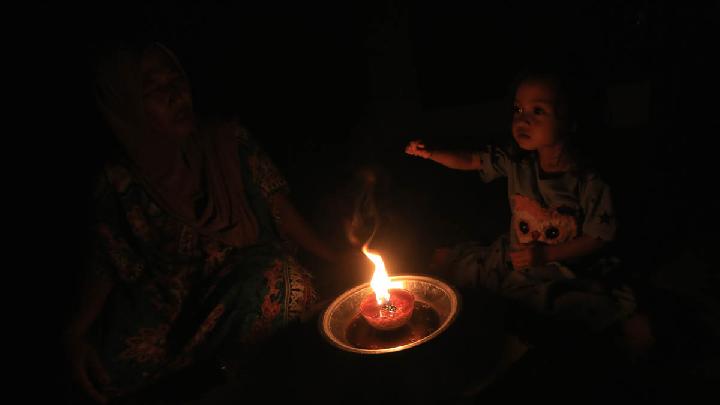
Rolling blackouts in Java and Bali are the result of a shortage of coal supplies. There is disarray from top to bottom.
ONE of the bitterest ironies this year is the fact that Indonesia has abundant coal reserves, but coal-fired power plants (PLTUs) are experiencing fuel shortages. As a result, in the second and third weeks of June, the electricity supply in Java, Madura and Bali experienced rolling blackouts, which were much mocked online.
Although the main cause is clear, state electricity company PLN and the Energy and Mineral Resources Ministry attempted to obscure the true nature of the problem. PLN claimed that two power plants experienced disruption causing a reduction in supply. However, even if these two power plants each produce 1,000 megawatts, that is only a fraction of the total of 49,000 megawatts produced by power plants in Java, Madura and Bali. And the peak electricity demand in this region is still under 35,000 megawatts.
The Energy Ministry stated that supplies of coal for power plants are at a critical level. With limited coal reserves, power plants can only operate for 11 to 12 days a month. This is because PLN has yet to secure coal supply contracts sufficient to meet the annual demand of 154 million tons. It has only signed contracts for 134 million tons of coal.
On top of this, according to Energy Minister Bahlil Lahadalia, the price of coal supplied under the domestic market obligation (DMO) of 25 percent is far below the international benchmark price. As a result, producers prioritize overseas sales, which command a much higher price. The consequences of this, says Bahlil, is a shortage of coal supplies in Indonesia.
However, the Energy Ministry is obscuring the fact that the shortage of coal is in fact caused by a reduction in the production plan (RKAB). Last year, the Energy Ministry reduced the RKAB by 600 million tons, far below the 2025 production figure of around 790 million tons. As well as this, the RKAB is now set annually, not for a three-year period as it was previously.
And this is the problem. Bahlil’s argument that PLN still has sufficient coal stocks after the RKAB reduction is completely mistaken. What he is ignoring is the fact power plants cannot simply consume any coal. The furnaces can only burn medium-calorific-value coal.
When the RKAB was cut, stocks of medium-calorific-value coal began to run short. Only 20 percent of national production is of medium and high-calorific-value coal. The remaining 80 percent is low-calorie coal. And while high-calorific-value coal is exported by producers, the remaining domestic stockpiles are low-calorific-value coal that is not suitable for power plants. Consequently, these power plants cannot operate optimally because their capacity has been intentionally reduced.
And the new regulation setting the RKAB for only one year at a time has also resulted in PLN experiencing difficulties obtaining contracts to secure supplies. This has led PLN to become dependent on the spot market, where prices rise and fall and deliveries are inconsistent, to cover supply shortfalls. On the other hand, transactions on the spot market provide an opportunity for people to become rent seekers.
Therefore, the reduction in the RKAB has backfired. Instead of regulating the coal price, this decision has disadvantaged many people. The lack of transparency and clear criteria in the production decreases has led to the RKAB becoming vulnerable to manipulation. And there are indications that the determination of the production plan was discriminatory because a number of companies were not obliged to cut production at all.
The reduction of the RKAB is only part of the problem. There are also other chronic issues: reliance on coal-fired power plants, the disadvantageous take-or-pay contracts with private power suppliers, and PLN’s poor cash flow caused by the government delaying compensation payments. Strong political will is needed to correct the chaotic management of electricity.
The failure to keep the lights on in a nation blessed with abundant coal supplies is evidence of poor management of the state.
Fact Check: Is PLN Planning a 3-Day Java-Bali Blackout?
4 hari lalu

Tempo's fact check reveals a viral PLN poster announcing a three-day Java-Bali power outage is an AI fabrication, though rolling blackouts continue.
PLN Says Java's Rolling Blackouts Are Starting to Decline
7 hari lalu
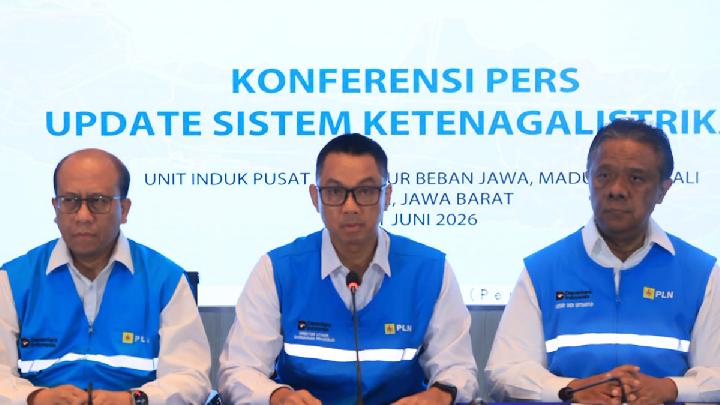
Darmawan Prasodjo, the President Director of PLN, stated that one of the two power plants that went out of the Java Island power system has been successfully restored.
PLN Secures Medium-Rank Coal to End Java Blackouts
8 hari lalu

PLN lists the Java power plants receiving medium-rank coal as the state utility scrambles to secure supply and prevent further blackouts.
What Caused PLN's Rolling Power Outages Across Java
10 hari lalu
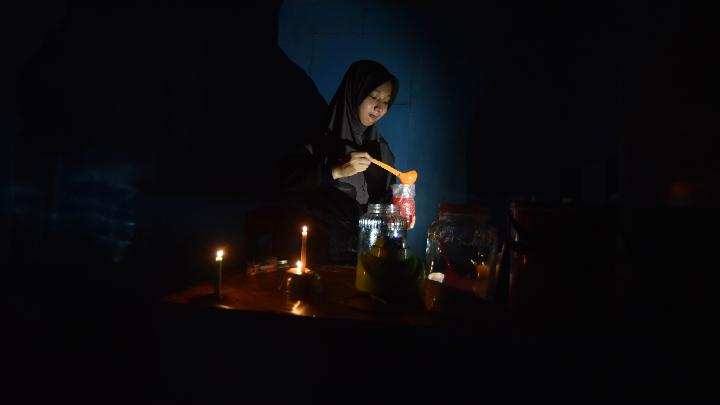
PLN has implemented rolling blackouts across Java amid coal supply disputes linked to the domestic price cap.
Fact Check: Is a 9-Day Global Blackout Starting on July 18?
11 hari lalu

Fact check - There are no plans for a global power outage or blackout.
Jakarta to Turn Off Landmark Lights for Energy Saving
17 hari lalu

The Jakarta Environmental Agency announced that major landmarks and roads across the city will turn off their lights for 1 hour on Saturday, June 13.
Govt Denies Rumors of Coal Crisis Behind Recent Blackouts
17 hari lalu
The Ministry of Energy and Mineral Resources denied rumors that a coal supply crisis caused the rolling blackouts across the Greater Jakarta area.
Blackouts, Water Outages Spark Protests in North Sumatra
17 hari lalu
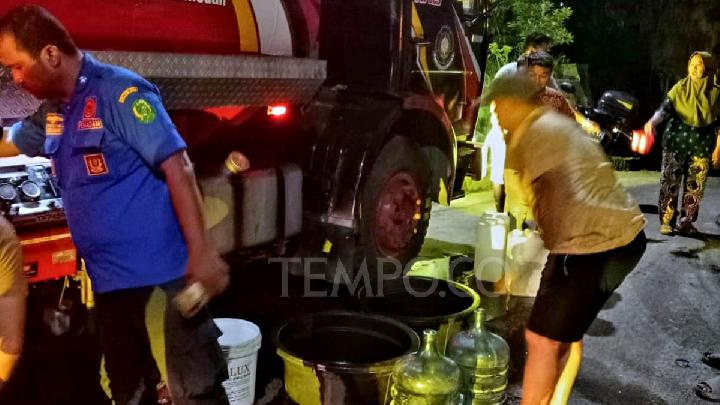
Prolonged power blackouts in North Sumatra have triggered severe water outages across Medan, prompting public protests and demands for compensation.
Fact Check: Sumatra Blackout Not Linked to Nuclear Material Smuggling
19 hari lalu

Fact check - There was no evidence of sabotage or intentional acts in the blackout in Sumatra island in Indonesia.
As Hot Summer, Blackouts Loom, Iraq Looks to Solar Power
23 hari lalu
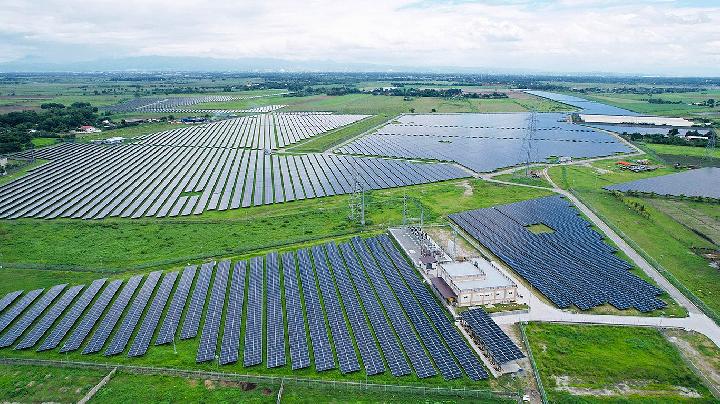
Despite abundant sunshine, Iraq has only recently embraced solar power as a solution to its recurring summer electricity shortages.



































:strip_icc():format(jpeg)/kly-media-production/medias/3202958/original/062911200_1596893908-Persijap_Jepara.jpg)