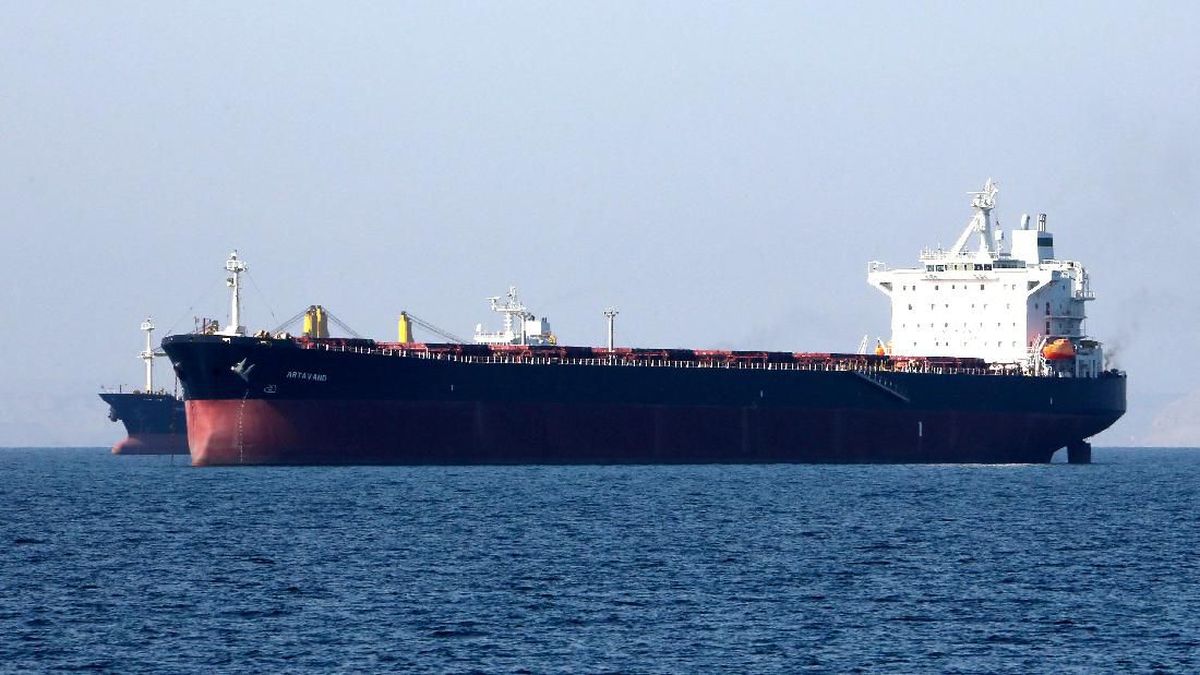
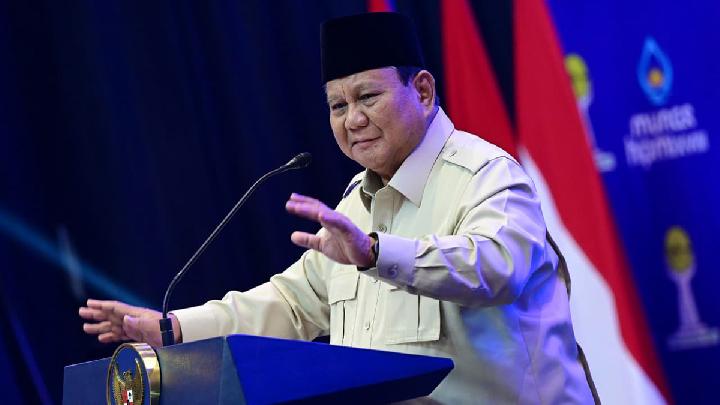
TEMPO.CO, Jakarta - Viral videos featuring preacher Miftah Maulana Habiburrahman, popularly known as Gus Miftah, have been circulating on social media, suggesting that two Pertamina oil tankers successfully passed through the Strait of Hormuz thanks to the diplomatic intervention of President Prabowo Subianto.
The posts, which gained traction on Facebook [archive] and TikTok during the second week of April 2026, claim this diplomacy secured national fuel supplies and stabilized prices. The claims stem from a recording of Miftah’s lecture in Krasakageng Village, Pekalongan, on April 7, 2026, shared by the YouTube channel Sragi Media Live Streaming.
"While all passing ships were being intercepted by Iran, two Pertamina ships carrying oil were allowed to pass through the Strait of Hormuz due to Pak Prabowo’s diplomacy," Miftah stated.
Tempo verified these claims through reverse image searches, ship-tracking data, and interviews with Middle East analysts.
Two Pertamina Oil Tankers Remain Stalled in the Arabian Gulf
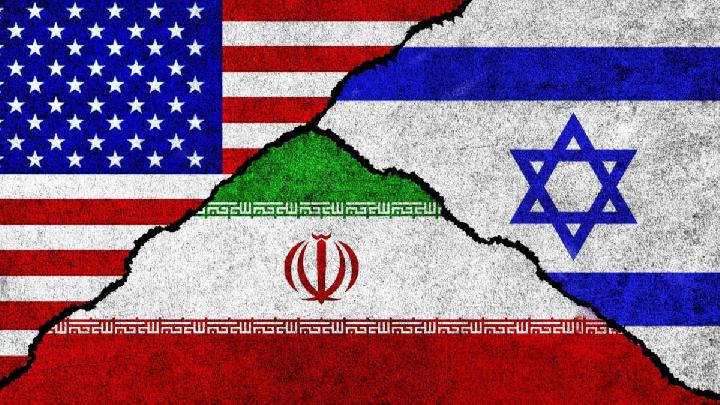
Two Pertamina cargo ships, in reality, remain detained in the Arabian Gulf following the military strikes on Iran by the United States and Israel on February 28, 2026. Of the four units operating in the region, only the Paragon and the Rinjani managed to pass before the geopolitical tensions peaked.
Pertamina President Director Simon Aloysius Mantiri clarified that the two vessels that successfully exited the area were not carrying crude oil for domestic needs. Meanwhile, the Pertamina Pride and the Gamsunoro remain stalled in the Arabian Gulf as of April 19, 2026, according to Vega Pita, acting Corporate Secretary of PT Pertamina International Shipping (PIS), as reported by Antara.
Marine Traffic data monitored by Tempo confirms that the Pertamina Pride is currently idling in the Persian Gulf, having departed from Ras Tanura, Saudi Arabia, on March 14.
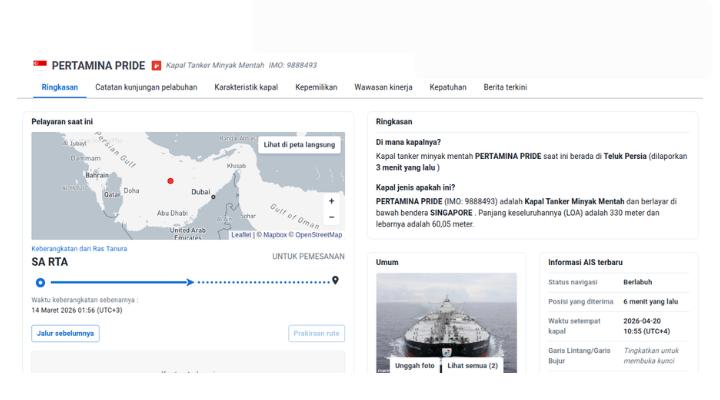 Screenshot of Pertamina Pride's position in the Persian Gulf. Source: Marine Traffic, April 21, 2026.
Similarly, the Gamsunoro, which set sail from Khur Al Zubair, Iraq, was forced to dock at the Port of Dubai on April 9 after failing to clear the Strait of Hormuz.
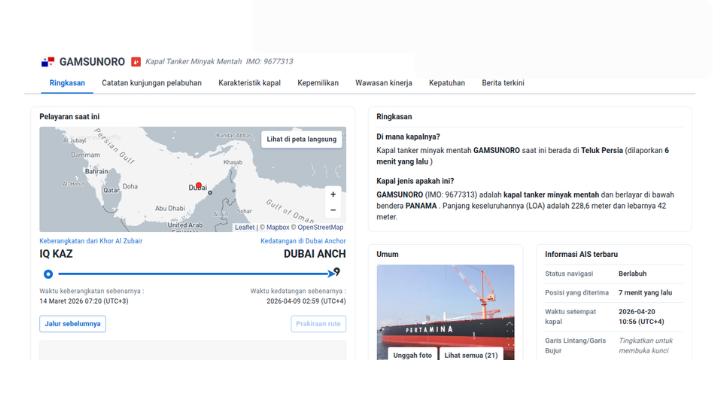 Screenshot of Gamsunoro's position in the Persian Gulf. Source: Marine Traffic, April 21, 2026.
Indonesia Absent from Iran’s Passage Agreements
Abdullah, an International Relations lecturer at the Faculty of Social and Political Sciences at Brawijaya University, asserted that the movement of the Paragon and Rinjani was not a byproduct of government diplomacy. Rather, the ships crossed while Iran’s blockade was still porous. The continued detention of the Pertamina Pride and Gamsunoro, he argues, suggests a communication deadlock between Jakarta and the Islamic Revolutionary Guard Corps (IRGC).
BBC reports indicate that several Asian nations, including China, India, Pakistan, and the Philippines, have secured specific passage agreements with Tehran. Abdullah noted that vessels allowed through have adhered to strict IRGC protocols. "The two Indonesian ships have yet to meet the protocols demanded by the IRGC," he said.
Agastya Wardhana, an International Relations lecturer at Airlangga University, attributed passage permissions to two factors: geopolitical alignment (as seen with Russia and China) or significant diplomatic leverage (as seen with Thailand and Malaysia). He highlighted the possibility of undisclosed diplomatic failures behind the stagnation of the Pertamina fleet, noting that negotiations in conflict zones depend on variables that do not always lead to success.
"There may be instances where diplomatic efforts have failed but haven't been publicized," Agastya told Tempo via a messaging app on April 20, 2026.
Impact of the Closure of the Strait of Hormuz on Indonesia
The Strait of Hormuz handles roughly 20 percent of the world’s oil and natural gas. Iran’s closure of this artery has triggered a decline in production, export obstacles, and a surge in global crude oil prices. For example, the price of Brent oil has jumped by over 55 percent since the conflict erupted.
This global supply shock has impacted Indonesia. Central Statistics Agency (BPS) data shows Indonesia imported 15.99 million tons of crude in 2025, primarily from Nigeria, Angola, Saudi Arabia, and Brazil. The two tankers currently detained were carrying supplies meant to cover 2-3 days of national demand.
Oil and gas expert from Aspermigas, Moshe Rizal, stated that the closure of the Strait of Hormuz has raised logistics costs and commodity prices. The state budget has also swelled due to fuel subsidies as market prices exceed the macro assumption of US$70 per barrel.
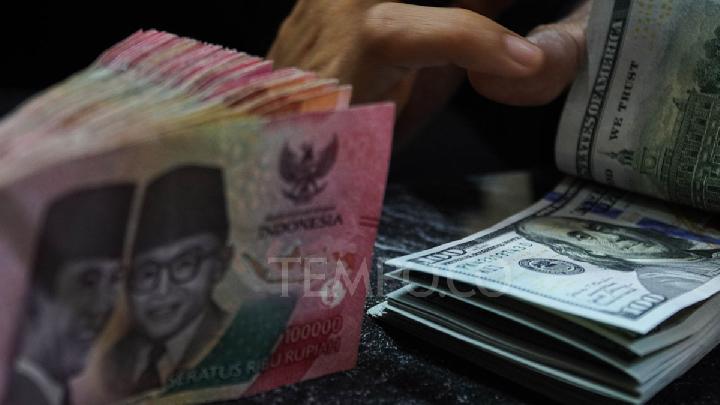
The crisis has also battered the rupiah. Between late February and April 6, 2026, the currency weakened by 1.91 percent, hitting a spot rate of 17,042 per US dollar.
The government has pledged to maintain fuel prices through the end of 2026. However, Energy and Mineral Resources Minister Bahlil Lahadalia clarified that this policy is due to the state budget's ability to withstand fluctuations, not the claimed passage of the Pertamina ships.
Nevertheless, Chairperson of the House of Representatives Commission VII, Lamhot Sinaga, emphasized the need for adaptive measures to maintain budget stability.
"When global prices hit US$140 per barrel against a budget assumption of US$70, the fiscal pressure becomes very high," he told Antara on April 4, 2026.
Ahmad Suudi contributed to this article.
TEMPO FACT-CHECK TEAM
**Do you have information or claims that you want to have fact-checked? Contact our ChatBot. You can also send criticism, objections, or feedback for this Fact-Checking article via email to [email protected].



























:strip_icc():format(jpeg):watermark(kly-media-production/assets/images/watermarks/bola/watermark-color-landscape-new.png,1125,20,0)/kly-media-production/medias/5495647/original/074499000_1770385031-barba.jpeg)