
TEMPO.CO, Jakarta - Indonesia's benchmark stock index plunged more than 3 percent on Wednesday as global investors shifted away from riskier assets, including those in emerging markets, amid concerns over global interest rates, U.S. Treasury yields, and a strengthening U.S. dollar.
The Jakarta Composite Index (JCI) closed down 217.45 points, or 3.56 percent, at 5,883.88. The LQ45 index, which tracks the country's most liquid stocks, fell 20.26 points, or 3.39 percent, to 578.17.
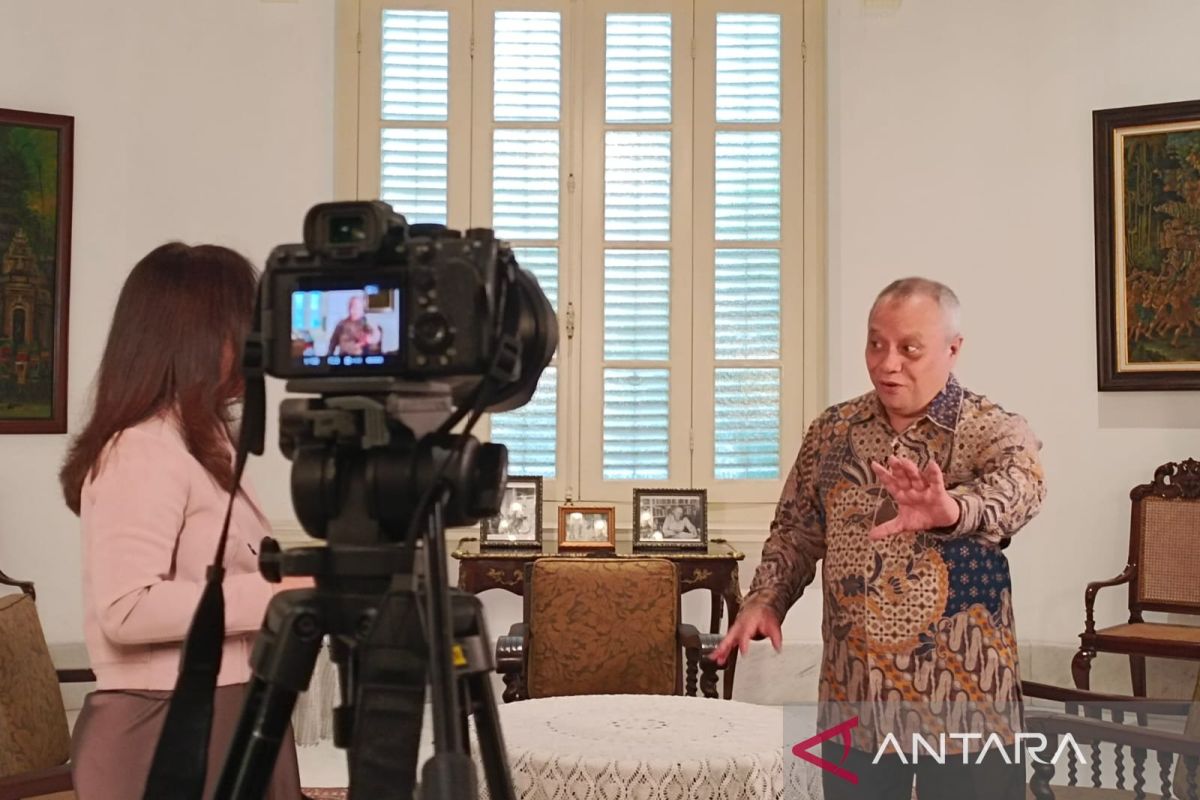
"The market remains focused on the outlook for global interest rates, movements in U.S. Treasury yields, and the stronger U.S. dollar, all of which have made investors more cautious toward risk assets in emerging markets," capital market analyst Elandry Pratama told Antara on Wednesday.
Domestically, he said, pressure on the rupiah, which recently weakened to around Rp18,000 per U.S. dollar, weighed on market sentiment and triggered profit-taking among investors.
Elandry added that investors are also awaiting greater clarity on the implementation of several fiscal policies and priority government programs to assess their potential impact on economic growth, the budget deficit, and Indonesia's long-term fiscal sustainability.
"The latest MSCI review, which did not result in any change to Indonesia's status, also failed to provide a new positive catalyst for the market in the near term," he said.
Foreign Investors Remain Cautious
According to Elandry, foreign investors are currently adopting a wait-and-see approach.
While Indonesia's economic fundamentals and stock market valuations remain relatively attractive compared with several regional peers, investors are still seeking greater certainty over exchange-rate stability, the direction of global monetary policy, the effectiveness of government fiscal measures, and the consistency of economic reforms.
"As a result, foreign capital inflows have yet to return aggressively and remain selective, focusing mainly on fundamentally strong and highly liquid stocks," he said.
Market Outlook
Elandry expects the JCI to move within a consolidation phase in the near term, with volatility likely to remain elevated.
Without stronger positive catalysts from either domestic or global developments, he said the market is likely to trade sideways with a cautious bias.
Investors will also closely monitor the implementation of government fiscal policies and their impact on economic activity during the second half of 2026.
"However, if external pressures begin to ease, the rupiah stabilizes, and there is greater clarity on the government's economic policy direction, opportunities for a technical rebound and improved market sentiment remain open," Elandry said.
Broad-Based Sell-Off
After opening higher, the JCI quickly moved into negative territory and remained in the red for the rest of the trading session.
All 11 sectors tracked by the IDX-IC sectoral index closed lower. The basic materials sector recorded the steepest decline, falling 6.26 percent, followed by the energy sector, down 5.83 percent, and the infrastructure sector, which lost 4.47 percent.
Among individual stocks, PTPW, BHAT, LINK, SCMA, and BINA posted the largest gains, while CTTH, ARKO, BABY, BIPI, and ENRG suffered the sharpest declines.
Trading volume reached 24.8 billion shares worth Rp15.13 trillion (US$920 million), changing hands in about 2 million transactions. A total of 103 stocks advanced, 646 declined, and 210 were unchanged.
Across the region, Japan's Nikkei index fell 0.88 percent, while China's Shanghai Composite rose 0.11 percent. Malaysia's Kuala Lumpur Composite Index gained 0.13 percent, and Singapore's Straits Times Index added 0.20 percent.
Read: JCI, Rupiah Weaken Ahead of MSCI Decision
Click here to get the latest news updates from Tempo on Google News
























:strip_icc():format(jpeg)/kly-media-production/medias/5414491/original/012054700_1763287155-530668458_18471777553074306_380593477510268437_n__1_.jpg)
:strip_icc():format(jpeg):watermark(kly-media-production/assets/images/watermarks/bola/watermark-color-landscape-new.png,1125,20,0)/kly-media-production/medias/5495647/original/074499000_1770385031-barba.jpeg)








:strip_icc():format(jpeg):watermark(kly-media-production/assets/images/watermarks/bola/watermark-color-landscape-new.png,1125,20,0)/kly-media-production/medias/5469567/original/092858600_1768130667-4.jpg)