
TEMPO.CO, Jakarta - Bank Indonesia (BI) Governor Perry Warjiyo outlined the central bank's steps to strengthen the rupiah exchange rate. He expressed confidence that the rupiah would stabilize and tend to strengthen.
"We collected foreign exchange reserves upon entry, and we will not hesitate to use them to stabilize the rupiah exchange rate. We believe the rupiah will stabilize and even tend to strengthen," Perry said in an online press conference on Wednesday, January 21, 2026, as quoted by Antara.
His confidence is also supported by the continued good condition of domestic economic fundamentals, including attractive yields, low inflation, and an improving economic outlook.
Recently, the rupiah exchange rate has been under pressure. Last Tuesday, the rupiah was at Rp 16,945 per US dollar, a 1.53 percent weakening (point to point/ptp) compared to the end of December 2025. Last Wednesday, the rupiah closed at Rp 16,936 per US dollar, a 20-point gain, or 0.12 percent.
Perry further explained that BI will not hesitate to intervene significantly through the offshore NDF (non-delivery forward) market, DNDF (domestic non-delivery forward), and the spot market.
Recently, he said, the exchange rate has been influenced by both global and domestic factors. Several global factors include geopolitical dynamics, US tariff policies, high US Treasury yields, and expectations of a smaller Fed Funds Rate (FFR) cut.
"In addition, other conditions have caused the dollar to strengthen and capital outflows from emerging markets to developed countries, including the United States. In 2026 (as of January 19, 2026), there was a net outflow of US$1.6 billion," Perry said.
Meanwhile, on the domestic front, Perry noted the significant demand for foreign exchange from several corporations and market perceptions of fiscal conditions. Furthermore, the nomination process for BI Deputy Governors also influenced foreign exchange market perceptions.
"Therefore, we emphasize that the Deputy Governor nomination process is in accordance with the law and governance, and of course, does not affect the implementation of Bank Indonesia's duties and authorities, which remain professional and with strong governance," said Perry.
BI Senior Deputy Governor Destry Damayanti added that the exchange rate slump is not only occurring in Indonesia, but also in several neighboring countries. Specifically, she stated that the recent rupiah depreciation has been deeper, primarily due to market perception.
"Therefore, we need to reverse that perception and demonstrate that we are still relatively safe. Our foreign exchange reserves are also still very strong at US$156 billion," Destry said.
Destry added that the central bank is not only intervening, but also optimizing its monetary operations, both through the use of the SRBI (Standar Rupiah), the interest rate channel, and efforts to make rupiah assets more attractive with more attractive returns.
One of BI's initiatives is to continue strengthening the use of local currency transactions (LCT). From January to December 2025, LCT transaction volume increased significantly. At the end of December 2025, the value of LCT transactions reached US$25.66 billion, a sharp increase compared to US$12.5 billion in 2024 the previous year.
She assessed that the increased use of local currencies other than the US dollar was one of Bank Indonesia's strategies to reduce dependence on the dollar.
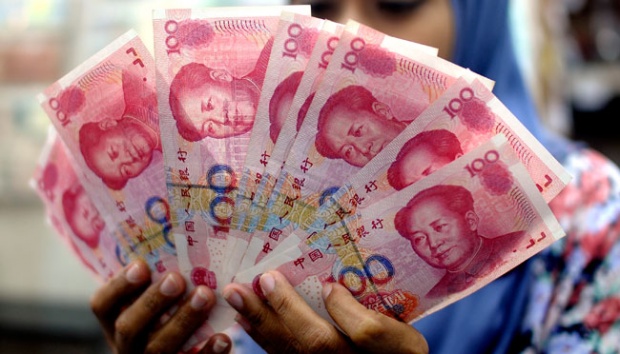
BI is also developing non-dollar markets. In the past month, BI has opened the rupiah-Japanese yen and rupiah-Chinese renminbi (RMB) transaction markets, which have shown an increasing trend. This step is considered important because, based on banking transaction data, BI observes that many banks still require RMB or CNY, but have previously conducted transactions in US dollars.
This pattern, Destry said, is what Bank Indonesia is trying to curb. "So, going forward, we are encouraging those who need CNY to also be active in the rupiah-CNY market. And in this regard, BI has been actively trading in these two currencies in the past month."
Teuku Riefky, an economist at the Institute for Economic and Social Research at the Faculty of Economics and Business, University of Indonesia (LPEM FEB UI), previously assessed that the nomination of Deputy Finance Minister Thomas Djiwandono as Deputy Governor of Bank Indonesia (BI) would put downward pressure on the rupiah exchange rate. He said Thomas's nomination would likely affect BI's independence.
Riefky explained that investor confidence in BI's independence had begun to wane last year, when the central bank continued to cut its benchmark interest rate despite rupiah pressure, implemented a burden-sharing scheme with the Ministry of Finance, and introduced a liquidity injection policy from Finance Minister Purbaya Yudhi Sadewa.
"This is also evident in the continued rise in government bond yields and the outflow of foreign capital," Riefky said when met at the Center for Strategic and International Studies office in Jakarta, Tuesday, January 20, 2026.
Read: Bank Indonesia Chief Explains Factors Behind Rupiah's Weakening
Click here to get the latest news updates from Tempo on Google News







































:strip_icc():format(jpeg)/kly-media-production/medias/5486410/original/015853500_1769586166-Pesib_Kurzawa.jpg)