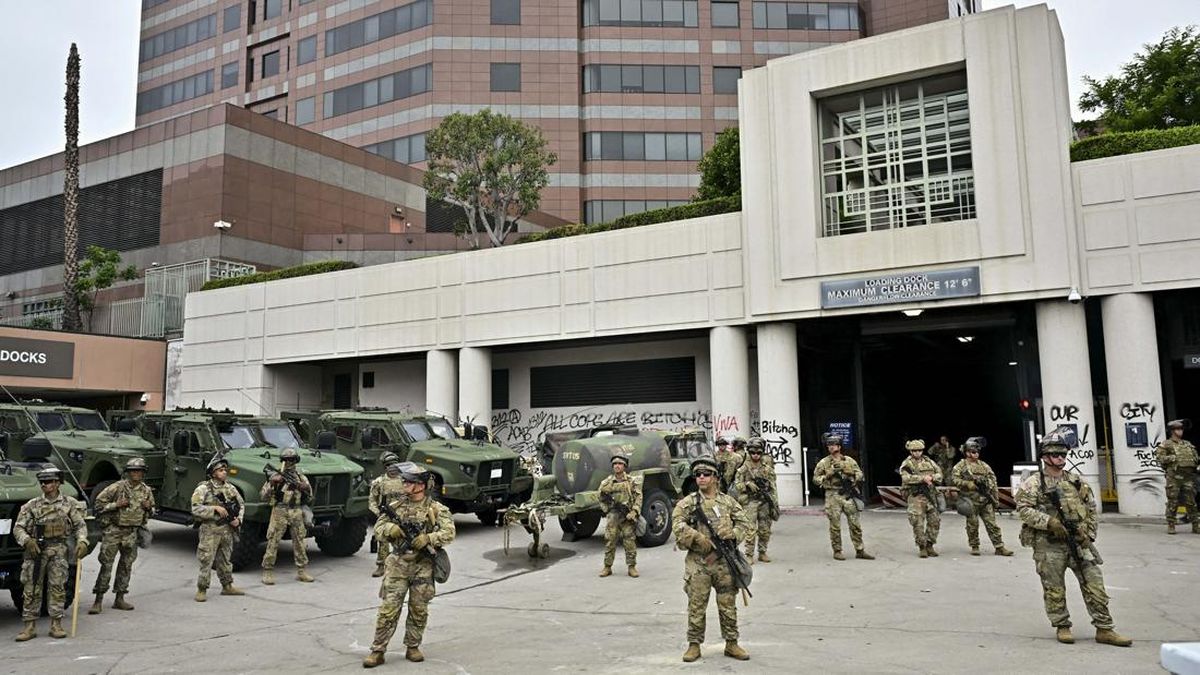
TEMPO.CO, Jakarta - Since Trump returned to the White House in early 2025, the deportation strategy has been carried out aggressively. From several fatal shootings to thousands of arrests, these actions have drawn widespread attention to how U.S. Immigration and Customs Enforcement (ICE) operates.
Against that backdrop, the following section aims to provide a deeper understanding of ICE, including its role, how its officers are organized, and when the agency can and cannot make arrests.
What Is ICE?
According to uk.usembassy.gov, the U.S. Immigration and Customs Enforcement (ICE) is the largest investigative arm of the Department of Homeland Security (DHS).
The agency is tasked with preventing terrorist and criminal activity by targeting the people, money, and materials that support terrorist and criminal organizations.
Established in 2003 as part of the Homeland Security Act of 2002, ICE is responsible for investigating a wide range of domestic and international activities arising from the illegal movement of people, goods and contraband into, within, and out of the United States.
Its scope spans multiple areas, including national security threats, smuggling violations, and immigration fraud.
As noted by ice.gov, ICE now operates with a workforce of over 20,000 law enforcement and support personnel in more than 400 offices in the US and around the globe. As ICE leads in carrying out President Donald Trump’s mass deportation initiatives, the agency has been expanded by budget and mission.
How Are ICE Agents Organized?
ICE officers are recruited from what the Department of Homeland Security (DHS) describes as “qualified patriotic Americans from across the country.”
The agency sets eligibility requirements, including U.S. citizenship, fitness standards, background investigations, and, for certain roles, prior law enforcement or related experience.
Since Trump returned to the White House in early 2025, the number of ICE agents has jumped from around 10,000 to a whopping 22,000 as part of an aggressive hiring push to support expanded immigration enforcement.
One noticeable change has been in training length, that ICE shortened its training program for new officers from about 16 weeks to an eight-week course.
According to DW, the agency also eliminated some requirements such as extended Spanish instruction, which is a language widely spoken by the nation’s unauthorized immigrants.
When ICE Can and Cannot Make Arrests?
When compared to the average US’ police department, the powers held by ICE agents are When compared to an average U.S. police department, the powers held by ICE agents are significantly different. As BBC highlights, ICE officers can stop, detain, and arrest individuals they suspect of being in the U.S. illegally.
They may also detain U.S. citizens in limited circumstances, such as when a person interferes with an arrest, assaults an officer, or ICE suspects the person of being in the US illegally.
Regarding the use of deadly force, the U.S. Constitution allows law enforcement officers to employ it only when a person poses an imminent and serious threat to the officer or others, or when the individual has committed a violent crime and presents an immediate danger.
However, ICE agents cannot enter private homes or other private spaces without legal authorization of a signed judicial warrant.
As for how enforcement is carried out, ICE has also drawn attention for its operational tactics. According to CBC, ICE agents have increasingly been seen wearing masks and declining to identify themselves during arrests.
Todd Lyons, who has served as ICE director since last March, stated that the practice is intended to prevent officers from being doxxed, amid rising public scrutiny of the agency’s actions.
Read: Trump Raises Tariffs on South Korean Goods to 25%
Click here to get the latest news updates from Tempo on Google News





































:strip_icc():format(jpeg)/kly-media-production/medias/5486410/original/015853500_1769586166-Pesib_Kurzawa.jpg)