TEMPO.CO, Jakarta - Instead of withdrawing from the streets following the shooting deaths of two people at the hands of federal officers, residents of Minneapolis, in the US state of Minnesota, are resolutely building watch patrols, marching in the cold and standing up for one another. In the process, the city is redefining itself—and what "Minnesota nice" really means.
Even before federal agents shot and killed 37-year-old intensive care nurse Alex Pretti on Saturday, tensions over the Trump administration's aggressive enforcement activities in the Twin Cities were already high.
But Pretti's death, at a time where Minneapolitans were still reeling over the killing of 37-year-old Renee Good by Immigration and Customs Enforcement agents earlier this month, has led to further outrage.
"What happened yesterday to Alex Pretti is sickening. I feel an immense amount of grief for him, his family, and my city. It's also an even bigger eye-opener for what we're really dealing with," resident Victoria Jocko said.
"Those ICE agents violently assaulted him and then executed him in broad daylight," Jocko said.
And fears of more violence are mounting.
"The worry I have is: How many more of us are going to die before this thing's over with? How many more American citizens?" asked Vin Dionne, a Native American rights advocate, who has been active in ICE-watch patrols.
Immigration clampdown met with protests
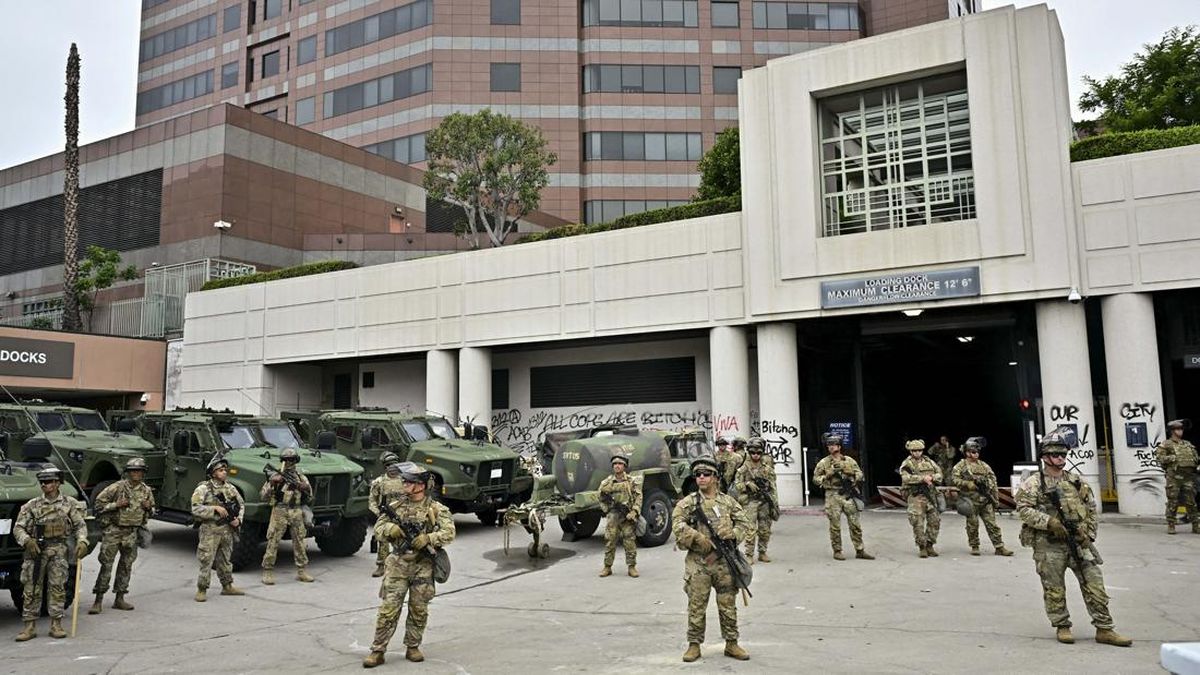
Since the Trump administration deployed thousands of agents in what it called intensified immigration enforcement push in the Minneapolis-St. Paul area, communities have responded by installing volunteer watchers to warn their neighbors of ICE's presence, and organizing grocery deliveries for migrant families too fearful of being swept up by ICE to leave their houses, as well as with large-scale anti-ICE protests.
A demonstration on Friday saw about 50,000 people marching amid temperatures of around -25 degree Celsius (-13 F) against ICE's presence in Minneapolis, ending up inside and around the Target Center, a sports and entertainment venue in the city center.
Dionne, who performed a Native American chant at the Target Center, said the thousands of people gathered in peaceful protest lay in stark contrast to Pretti's violent death at the hands of federal agents the next morning.
"That was a beautiful, amazing moment having that many people as peaceful as we've been staying. We don't want the army coming here to blow us away, right?" said Dionne. "And it brought so much strength and unity. It felt really good. And then the very next day, ICE murders one of our people, an everyday citizen."
Witnesses, videos contradict ICE account
In a press conference on Sunday US Border Patrol commander-at-large Gregory Bovino declined to provide a justification for the shooting. He also did not give clarification on whether Pretti brandished a gun during the encounter—a detail suggested by Department of Homeland Security Secretary Kristi Noem, but one that so far has not been seen on videos that have emerged of the incident.
But videos can make a difference at a time where the statements of administration officials are at odds with sworn witness affidavits filed in court.
"I'll say Kristi Noem pretty much lied when I saw the press conference yesterday. If people are creating videos, posting them on Instagram, Facebook, and just giving the public the real truth about it, I think public opinion can be swayed," said James Cook, a civil rights lawyer providing pro bono legal aid to families affected by ICE raids.
"I think that's the only thing that Trump really acknowledges and pays attention to. And as it becomes clear the public does not agree with him in what he's doing, I think it could change things."
Residents declare end of 'Minnesota nice'
Public anger has continued to rise, with anti-ICE protests erupting over the weekend in Minneapolis after Pretti's death, with demonstrators chanting "No more Minnesota nice" and "ICE out now."
"Minnesota nice" is a descriptive shorthand for a culture of warmth and friendliness—translating to the kind of place where thoughtful residents will offer hand warmers and tea amid frigid temperatures or offer their parked cars as spaces for pedestrians to warm up.
But people here also say the federal surge has made it into the kind of place where permanent watchfulness has become a fact of life, where people size each other up on the street to protect themselves.
"When I'm driving around, I'm more vigilant. I'm trying to avoid narrow streets where my car could be boxed in," activist Taylor Jones said.
"I was driving on the freeway the other night to a friend's house, and a giant SUV with heavily tinted windows was behind me for a while, and I missed my exit because oh my gosh, I might be being followed," Jones said. "Lots of people are taking just little precautions like that. And that's how you eat away at freedom, right? That's how you eat away at liberty."
Protesters worried about further escalation
Judy Levy, a 58-year-old nurse and ICE watcher in Minneapolis, said concerns about authoritarian motives were hard to shake.
"What they want is a civil war. What they want is for some reason for Donald Trump to declare martial law, to make it so that we do not have an election because he is losing popular support," Levy said. "They have lost the game. So the only way they can continue is to not play the game, to not give us an election."
But accompanying the anxiety, she said, is a sense of pride in her community.
"I've never been prouder to be from Minnesota in my whole life. I was proud when we stood up after George Floyd was killed. This feels like that again," Levy said. "And diversity is why we live here. It's what makes us great. It's what makes us the vibrant community that we are."
And these are communities that cannot be defended from a distance, Jones said.
"If all of us go inside and lock our doors and stay quiet, nothing will change. Nothing will change," Jones said. "And in my mind, I'm already not safe. If my government can continue to dehumanize people and murder them, then I'm already not safe because they can dehumanize me too."
Dionne, the Native American activist, said their efforts were not just tied to the moment, but to something deeper: a sense of who Minnesotans believe themselves to be, and a repurposing of what it actually means to be "Minnesota nice" in trying circumstances.
"Minnesotans are tough. We grew up in a cold state. We're also the nicest people ever. We do love one another. Part of us being nice—that's us being nice to our neighbors, and that's why we're standing up the way we are," Dionne said. "And if we have to set the bar and the tone for the rest of America, so be it. It's what we're doing."
Chiara Bachels contributed to this report.
Read: How Are ICE Agents Recruited, and Who Are They?
Click here to get the latest news updates from Tempo on Google News


























:strip_icc():format(jpeg)/kly-media-production/medias/5486410/original/015853500_1769586166-Pesib_Kurzawa.jpg)